Algae
Unlocking the Dual-Purpose Potential of
Microalgae in a Sustainable Bioeconomy
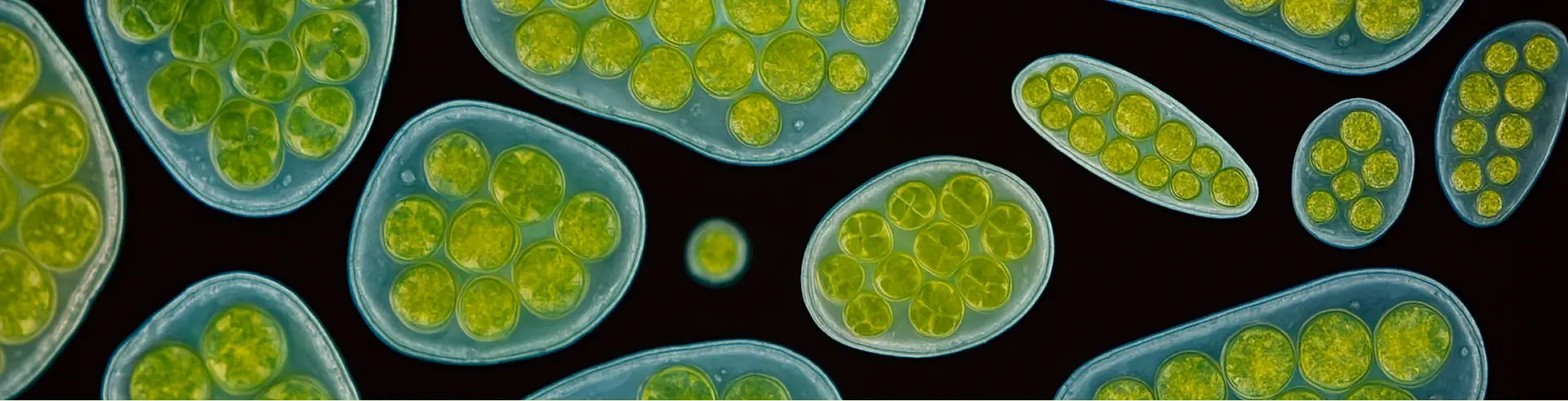
Microalgae are emerging as one of the most promising biological resources for a sustainable and circular European bioeconomy. With their ability to grow rapidly, capture CO₂, thrive year-round, and produce high-value bioactive compounds, microalgae or solutions for major global challenges such as climate change, food security, and the shift toward cleaner industrial processes.
In the GeneBEcon project, researchers explore how new genomic techniques (NGTs), advanced cultivation systems, and bioprocess innovation can transform microalgae into a dual-purpose platform:
1. Producing high-value carotenoids for use in food, feed, cosmetics, nutraceuticals, and pharmaceuticals.
2. Repurposing the residual biomass as a sustainable feed ingredient for poultry, supporting a zero-waste and circular value chain.

This technical report provides:
- A comprehensive overview of microalgae production in the EU and its fast-growing industrial landscape.
- Insights into scaling up photobioreactors, optimizing growth conditions, and overcoming technical bottlenecks.
- An exploration of gene-editing strategies (CRISPR/Cas) to boost carotenoid biosynthesis.
- Evidence from feeding trials, showing the potential and limitations of microalgae biomass as a poultry feed additive.
- An in-depth review of the regulatory and biosafety landscape, including requirements for NGT-derived microalgae and pathways for authorization in the EU.
Together, these findings highlight how microalgae can drive innovation across food, feed, biotechnology, and environmental sectors while supporting Europe’s transition toward a resourcee icient and zero-pollution bioeconomy.


Innovating the
Production Processes
The GeneBEcon project is dedicated to innovating production processes by investigating how New Genomic Techniques (NGTs) can drive advancements in energy-efficient, low-input, and zero-pollution agricultural production and industrial processing.
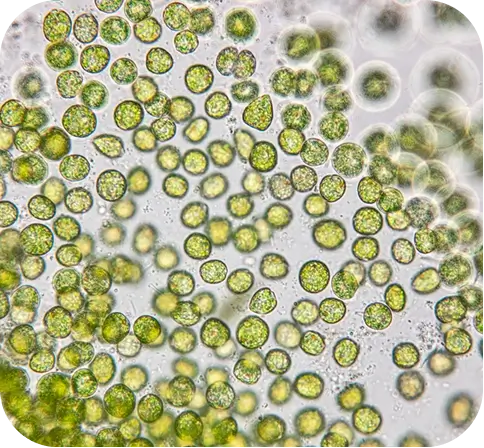
One of the crops under investigation in the project is the microalgae Chlorella, with the goal of extracting Mycosporine-like Amino Acids (MAAs) for pharmaceutical and other relevant applications. The project will develop a gentle extraction method that avoids harsh chemicals, enabling the residual biomass to be utilized as animal feed.
Access the D3.1 – Report on upscaling of WT microalgae strain – This report describes the upscaling of wild type Chlorella microalgae from a few millilitres to pilot scale production in a 250 liter photobioreactor.